
Read AI summary
Aaron Swartz was a symbol of the new generation of digital geniuses, a true icon surrounded by controversy and personal struggles. His life, marked by his passion for freedom and open access to information, ended tragically when, overwhelmed by pain and injustice, he decided to put an end to his existence.
He was something of a whirlwind of intellectual freedoms in a time of liberations and often chaotic springs. Aaron Swartz is, or was, one of the chosen ones of this new generation of instant geniuses, of these new geniuses that the digital stage has given us, a true icon full of unresolved controversies, who just a few days ago decided to say enough. In the darkness of his life, he chose to hold back his last breath, his last cry. He could not bear so much pain; it seems he did not have the strength to fight against what he considered unjust and unequal.
Many of us have wondered who was behind that name, and the answer came in a solid obituary published in a medium that would have been unthinkable a few years ago for a young man like Aaron, only 26 years old, with no university degree or formal studies. The prestigious and increasingly current “The Economist” gave Aaron a place in its weekly obituary and tells us a few things: the weekly says that Swartz was a passionate reader of philosophy, and also that he suffered from endless migraines. It mentions that he had devised countless “computer crimes” in order to make information held by a few available to everyone. He proved to be one of those rare free spirits who was never seduced by the temptations that large corporations generate.
From Reddit to Creative Commons: Swartz’s Legacy
A spirit similar to the one that led Steve Jobs, together with Wozniak (both co-founders of Apple), to begin their careers as entrepreneurs, giving birth to one of the most important companies in today’s economy. With the flow of the first millions, Apple was seen to mutate into a greedy machine for generating millions. A reason, among several others, why Wozniak chose paths different from those of Jobs, distancing himself from Apple. Bill Gates, another genius of his era, also walked these paths of sharing, then abandoned them, just as Jobs did, only to finally return to them, although in another format, through his immense philanthropic work.
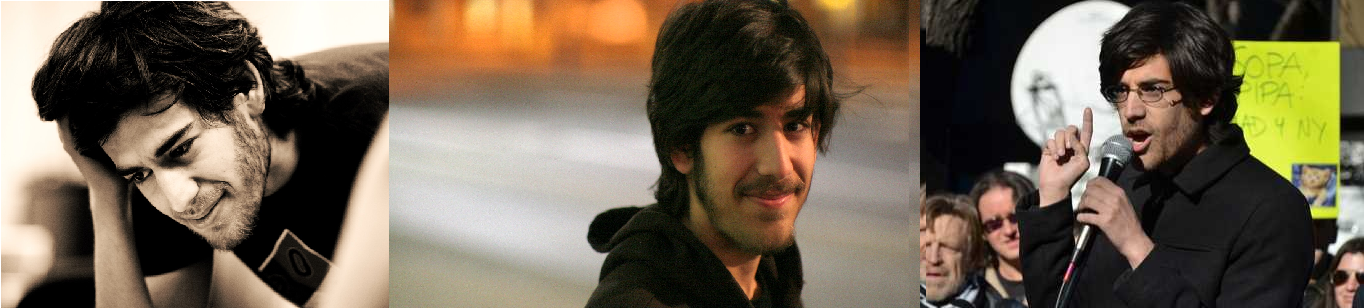
Returning to Swartz, we know he was the son of an executive at a computer company. Like Jobs (Reed College) and like Gates (Harvard), he dropped out of university, in his case Stanford, but before that he had already dropped out of school, becoming a true self-taught learner. He fed on information, preferred philosophy, and was a prodigious reader. Between the ages of 12 and 13 he created theinfo.org, something like a Wikipedia before Wikipedia, from which he set out to share all knowledge on a single website. At 14, also according to The Economist, he was already working with Tim Berners-Lee, creator of the World Wide Web, with whom he contributed to developing the Semantic Web with the aim of improving the possibilities of sharing information. He was co-author of the RSS 1.0 specifications. He also, in between his battles of principle, found time to create a commercial success or two. That is how Reddit was born, a sharing platform that elevated him to the pedestal of creators of commercial successes when it was sold to Condé Nast. He was one of the first architects of Creative Commons and contributed to the development of its licenses, thanks to which today we can, for example, obtain this photo of him.

Jacob Appelbaum, CC BY-SA
Swartz was much more than a talented programmer: he was a visionary who, from an early age, left his mark on the digital world.
Swartz’s Fight for a Free Internet
We know that several tried to seduce this hero of today’s world, Google among them, but this Robin Hood of cyberspace wanted no commitments, no positions, no salaries, no pompous offices.
Swartz dreamed of a shared world, a world where ideas were within everyone’s reach. His dream became his fight, and his fight, tireless indeed, became his nightmare.
In January 2011 he was arrested after an investigation linked him to a laptop that MIT staff had found covered by a cardboard box in a technical closet in the basement of Building 16. According to the federal indictment, from that computer, connected to the MIT network, millions of academic articles hosted on JSTOR had been downloaded in an automated way, using a download program that ran a simple piece of code.
It was academic information, much of it the fruit of research funded with public money, but access to it was conditioned by subscriptions and publishing agreements. Swartz considered it fair that this knowledge should be within everyone’s reach.
Sharing.
The initial federal indictment exposed him to a possible sentence of up to 35 years in prison. In 2012, the prosecution expanded the charges and increased his potential criminal exposure even further. The charges never went to trial, nor was there any verdict declaring him guilty: Swartz died before being tried.
JSTOR, a digital library that hosts academic publications from numerous publishers, had a legitimate and direct interest in protecting the content and the access conditions of its platform. On June 3, 2011, it reached a civil settlement with Swartz.
It was the prosecution that continued on its inexorable path, since stealing information is a crime; that is what the law says.
MIT, that beacon of authority we look upon with reverence, declares in its own mission statement its commitment to generating, disseminating, and preserving knowledge, and to working with others to bring it to bear on the world’s great challenges.
And what did MIT do? It chose the aseptic position of relative neutrality. At the request of the authorities, it handed over computer records and packet captures documenting the laptop’s activity, even before receiving the first grand jury subpoena. The report commissioned by the institution itself concluded that this handover had not broken the law. But the question was not merely legal: it was also moral.
MIT did not ask for Swartz to be prosecuted, but neither did it publicly oppose the prosecution, despite Aaron’s ties to its community. The report commissioned by the institution itself acknowledged that, by opting for neutrality, MIT failed to give due weight to three circumstances: that Swartz was a prominent contributor to Internet technology; that the law under which he was being charged was poorly drafted and raised serious doubts about its application to modern computing; and that the U.S. Government was carrying out an openly aggressive prosecution.
MIT’s own report ended up acknowledging that the institution had missed an opportunity to demonstrate the leadership it prided itself on. But reducing what happened to a “missed leadership opportunity” is, in itself, devastating. It was not an opportunity to reaffirm its prestige, but a chance to assume the moral responsibility that came with the principles it proclaimed. By failing to do so, MIT undermined part of the foundations on which that symbolic beacon guiding the scientific community stood, dimming the light that pointed it north.
The Tragedy of a Free Spirit
The depression that so often knocked on his door, and that tireless war he waged against monsters of his own and of others, were fed by the battle he was about to lose and which ultimately took his very life. His vital energy ran out, at least the energy that helped him bear his sorrows and his sleepless nights in this world, although part of his energy lives on.
In some dark room, somewhere in the real world, and in the virtual one too, there are other Aaron Swartzes, with other MacBook Pros switched on. Small lights in a world that today remains greedy and full of avarice, small stars that light up this dark sky that Aaron also shared with us.
The obituary posted by his friends and family says:
“He used his prodigious skills as a programmer and technologist not to enrich himself but to make the Internet and the world a fairer, better place.”
MIT says, perhaps honestly, that it wants to learn from these events… http://web.mit.edu/newsoffice/2013/swartz-analyis-charge.html
Perhaps Aaron, or some of the small lights that remain lit, have achieved something.
Returning today, October 20, 2026, to the original page of that obituary that moved me so much, I came across a paradox that is hard to ignore. The tribute to the man who dreamed of a more open Internet, one where knowledge could circulate freely, remains on a page that still uses the HTTP protocol, and which the browser flags as “Not secure.”
The web that Aaron helped transform seems to be slowly leaving him behind. It does not erase him or cancel him: it simply, almost naively, lets his footprints deteriorate, lets his pages stop mattering, lets his memory become ever harder to find. Like a grave without flowers, overgrown with weeds, its headstone cracking, all beneath a sky that still seems to be full of stars…

- Aaron Swartz: An Incomparable Genius in the Digital Age - October 20, 2026
- How to pay for Google Ads from Argentina? Complete step-by-step guide - July 21, 2025
- What is Digital Marketing? - February 28, 2024
¿Qué te pareció este artículo?
What do you think about this post?