Read AI summary
Digital marketing has changed a lot in a short time. In the past, most of the work revolved around SEO and the classic functioning of Google. Today, search engines coexist with generative AI systems like ChatGPT, Gemini, or Copilot. And that has opened up a new landscape where GEO emerges—a different approach to content positioning.
The logical question is whether SEO is still enough, or if GEO completely changes the way content is planned. The answer isn’t so clear-cut. Both have clear roles and can be used together. In this article, we analyze what GEO is, how it differs from SEO, how AEO comes into play, and what AIO means.
👉 Want to know what SEO for LLMs is? We recommend reading our article.

What is SEO and why it’s still key
SEO stands for “Search Engine Optimization”. It’s the set of actions aimed at improving a website’s visibility on traditional search engines like Google or Bing. Its goal is for a page to appear among the top results when someone searches for something specific.
SEO mainly focuses on three areas:
- Content: quality, relevance, search intent, and keyword usage.
- Authority: external links, reputation, and trust signals.
- Technical: speed, site structure, indexing, and user experience.
When you search for “best digital marketing agency in Argentina”, Google returns a list of pages ranked by relevance. That’s the realm of SEO. It works best when the user already knows what they want and is ready to take a specific action: buying, hiring, comparing prices, or looking for specific information.
That’s why, even with the emergence of new technologies, SEO remains a solid foundation. Traditional organic traffic continues to be a strong and stable channel in nearly every industry.
👉 If you want to learn more about what SEO is and what it’s for, we have a full article on this topic. Check out our blog!
What is GEO and what does it mean in marketing
GEO stands for Generative Engine Optimization. It refers to optimization for generative AI-based engines. Instead of focusing on keywords and rankings, GEO works to make content useful, clear, and comprehensive within conversational responses generated by models like ChatGPT, Gemini, or Perplexity.
When we talk about what GEO means in marketing, we refer to adapting information so that models can understand:
- Entities (people, brands, places, products)
- Relationships between those concepts
- Semantic context
- Topical authority
The difference between SEO and GEO lies in the focus. SEO targets a page that wants to rank. GEO aims to become a trusted source that an AI model can use to build an answer.
For example, if someone asks an AI engine:
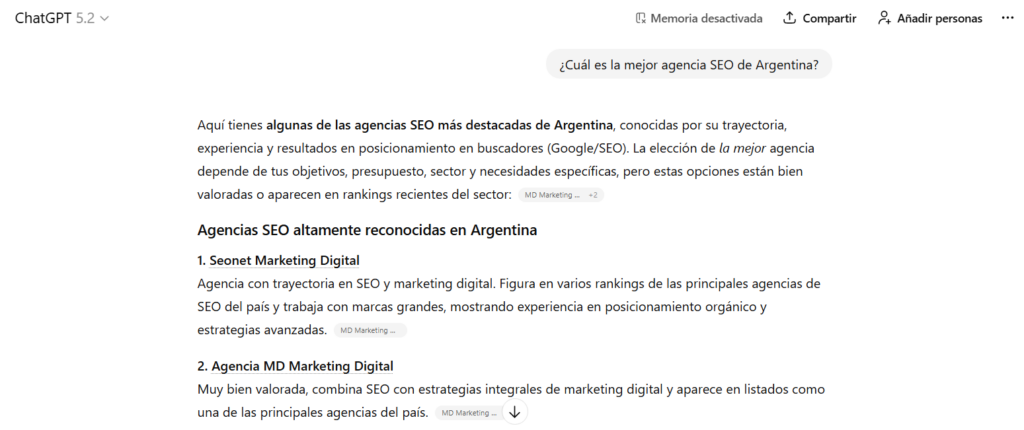
“Who is the best SEO agency in Argentina?”
The AI doesn’t show a list of links. It provides a full explanation and, if your content is well-optimized for GEO, it might be integrated into that response.
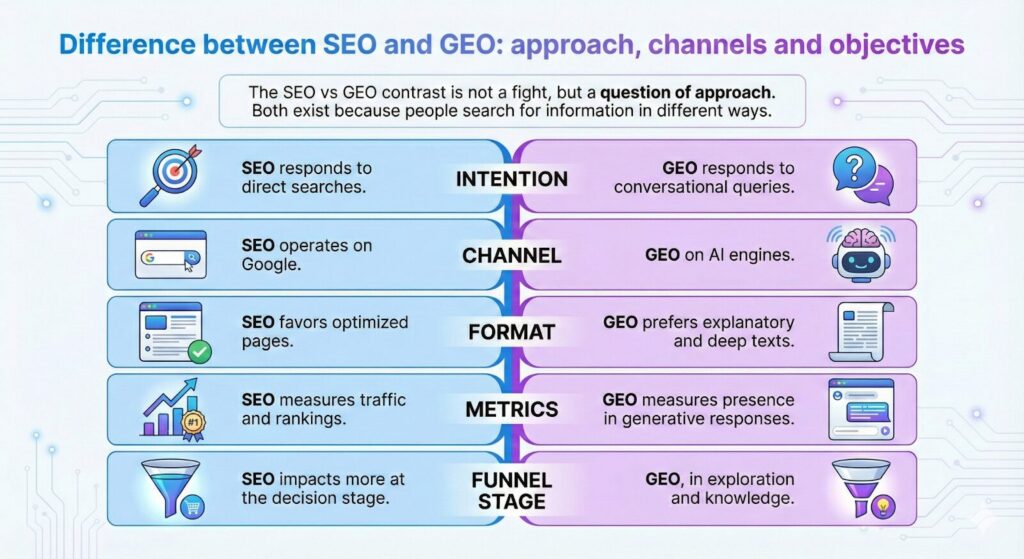
Difference between SEO and GEO: focus, channels, and goals
The SEO vs GEO contrast isn’t a battle, but a matter of focus. Both exist because people search for information in different ways.
- Intent: SEO responds to direct searches; GEO addresses conversational queries.
- Channel: SEO operates on Google; GEO in AI engines.
- Format: SEO favors optimized pages; GEO prefers explanatory and in-depth texts.
- Metrics: SEO measures traffic and rankings; GEO measures presence in generative responses.
- Funnel stage: SEO has more impact at the decision stage; GEO at exploration and awareness.
SEO vs GEO based on search intent
When someone already knows what they need, they use traditional search engines. For example:
“best Google Ads agencies in Argentina”.
But when they need to understand a topic, compare options, or ask for recommendations, they use a conversational engine. For example:
“What are the best SEM agencies in Argentina and which one should I choose?”
That’s where GEO comes in.
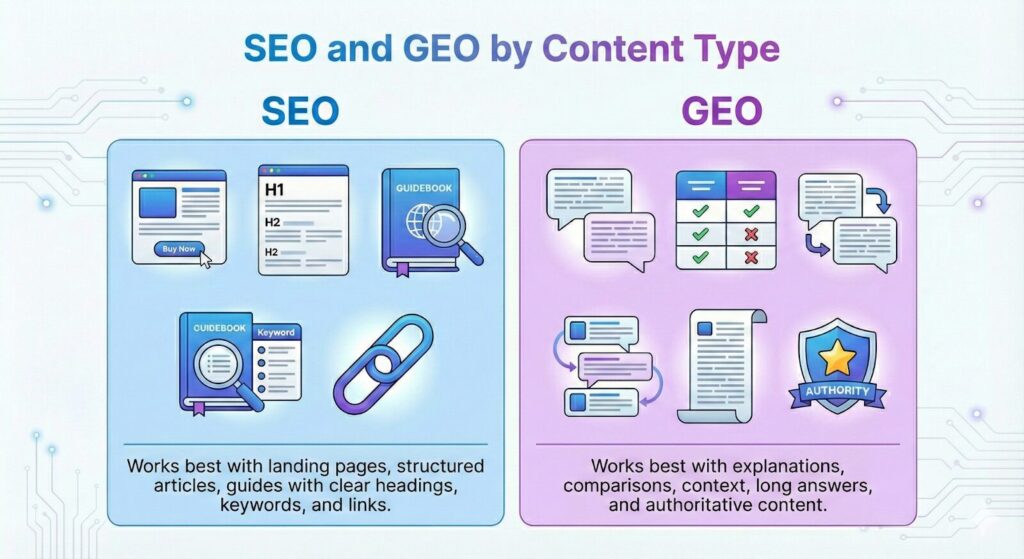
SEO and GEO based on content type
- SEO works best with landing pages, structured articles, guides with clear headings, keywords, and links.
- GEO works best with explanations, comparisons, context, detailed answers, and authoritative content.
AEO vs SEO vs GEO: how they fit together
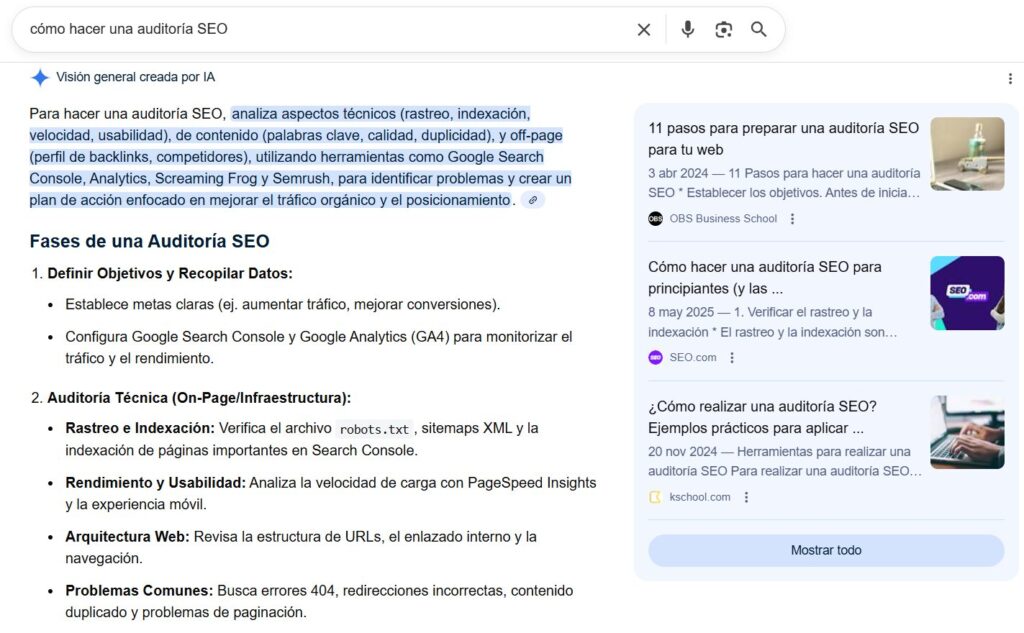
AEO stands for Answer Engine Optimization. It emerged when Google began providing direct answers in results, through featured snippets or answer boxes.
AEO sits between SEO and GEO:
- It’s more conversational than SEO.
- It’s narrower in scope than GEO.
- It works to have a specific answer highlighted.
A typical example is when you search on Google:
And the search engine shows a step-by-step guide before displaying links. That’s AEO.
SEO vs GEO vs AEO vs AIO: clarifying concepts
To clarify:
- AIO (Artificial Intelligence Optimization): umbrella concept that includes all types of optimization for AI.
- SEO: optimization for traditional search engines.
- AEO: optimization for short answers within Google.
- GEO: optimization for generative engines that create content from scratch.
This makes the landscape clearer without getting too technical.
👉 Want to learn the best digital marketing strategies for real estate agencies? Read our latest blog post!
SEO and GEO together: complementary strategy, not mutually exclusive
It’s not about choosing SEO or GEO. Ideally, content should work in both environments. An article can:
- Use clear headings and keywords for SEO.
- Include broad, well-connected explanations for GEO.
- Contain data, examples, and definitions that AI can interpret.
This is known as “LLM-friendly” content—that is, texts written so that both a person can understand them and a language model can interpret them without confusion.
SEO vs GEO is not a war, it’s evolution
SEO, GEO, and AEO are stages of the same journey. They’re not in competition—they complement each other. Each one responds to a different way of searching for information, and all coexist in today’s ecosystem.
The key is to think about content with a broader perspective. Not just writing for Google, but also writing for people who read AI-generated answers. Brands that understand this will connect better with their audience, no matter the channel.
If you want to review your content strategy or understand how to apply SEO and GEO strategies realistically, you can contact us at MD Marketing Digital. We’ll guide you directly and with a practical approach.

- Real estate marketing: strategic guide - March 19, 2026
- GEO vs SEO: what they are and how they differ - January 19, 2026
- How to do an SEO audit? - September 19, 2025
¿Qué te pareció este artículo?
What do you think about this post?