Read AI summary
Nowadays, people use their phones, computers, and visit physical stores before buying something. This creates a problem for companies. They have to make the user experience consistent across all these places. Maintaining the same voice and offering quick solutions across so many different media is a real challenge. And this is where omnichannel comes into play.

What Is Omnichannel Marketing?
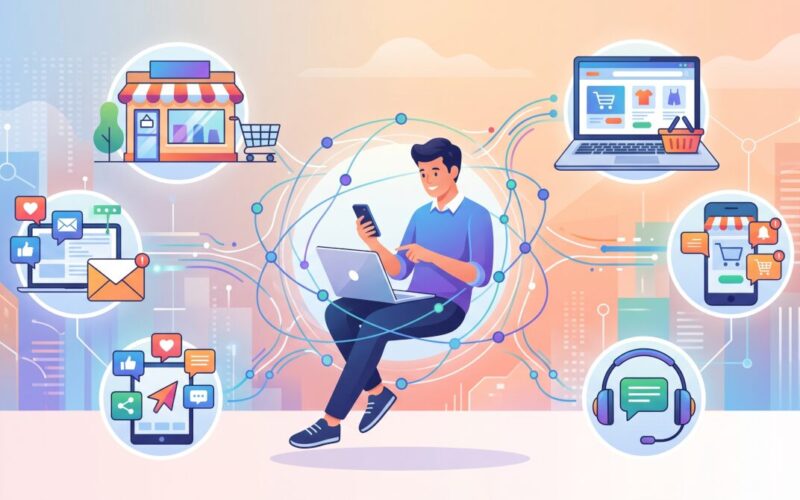
Omnichannel marketing is a strategy that connects a brand’s different channels and touchpoints to offer a continuous and consistent experience to the user. It’s not just about having profiles on multiple platforms. It’s about all those places working together. If a customer starts a purchase on their phone and finishes it in a physical store, the process must be seamless, since data, messages, and teams are fully integrated.
Omnichannel Marketing vs. Multichannel Marketing: What’s the Difference?
Being present on multiple channels does not by itself constitute an omnichannel strategy. When comparing multichannel and omnichannel marketing, the main difference lies in the connection.
| Feature | Multichannel Marketing | Omnichannel Marketing |
| Approach | Focused on the channel or platform. | Focused on the customer. |
| Connection | Channels operate separately. | Channels are interconnected. |
| Data | Each medium has its own database. | Information is centralized. |
| Message | May vary depending on the service channel. | It is consistent and adapts to the user’s journey. |
| Goal | Being in as many places as possible. | Offering a unified, frictionless experience. |
The multichannel approach simply opens several doors. The omnichannel approach ensures that all those doors lead to the same place and offer the same level of service.
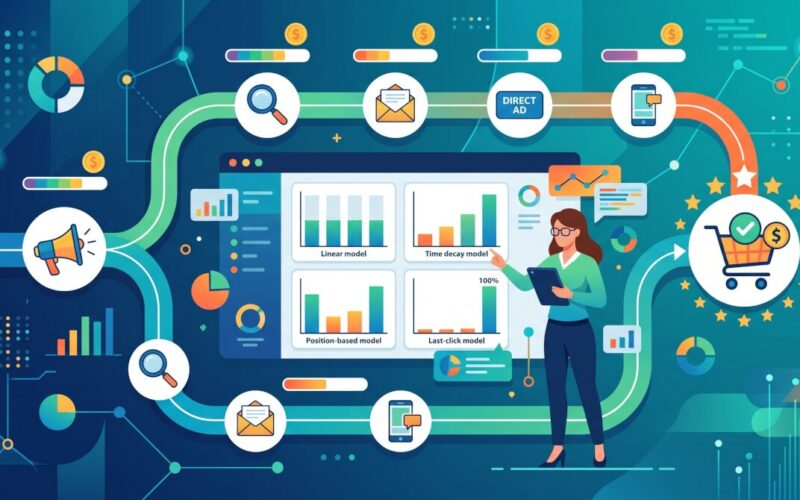
👉 Discover what a marketing attribution models are and which one your business needs to optimize your budget. Check out our latest article.
Which Channels Can Be Integrated into an Omnichannel Strategy?
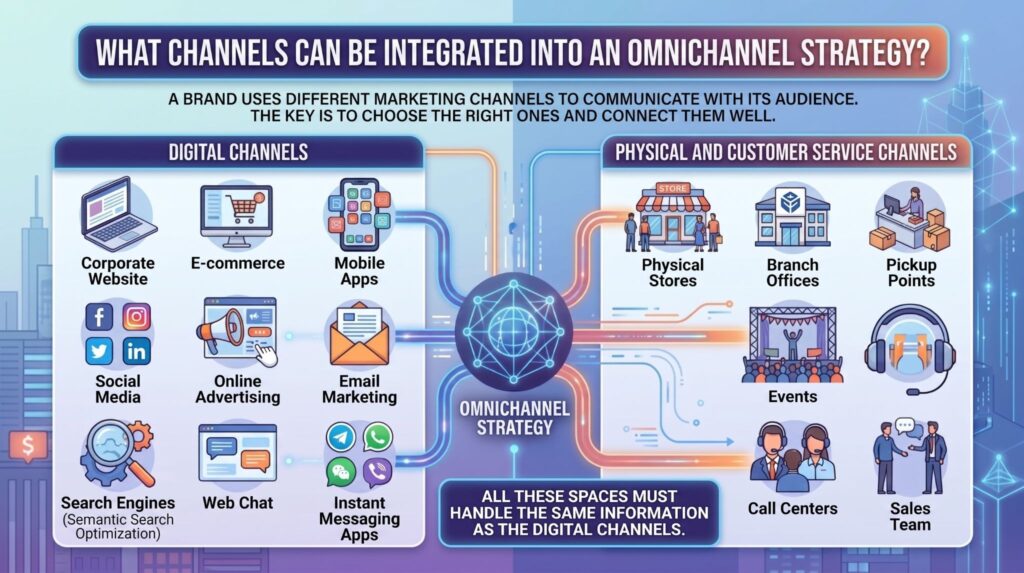
A brand uses different marketing channels to communicate with its audience. The important thing is to choose the right ones and connect them well.
Digital Channels
These are the media that exist on the internet. They include the corporate website, e-commerce, and mobile apps. They also cover social media, online advertising, and email marketing. Search engines play an important role here, so it’s key to optimize content considering factors such as semantic search. Finally, web chat and instant messaging apps should be added.
Physical and Customer Service Channels
These are the touchpoints in the real world. They cover physical stores, branches, and pickup points. They also include events, call centers, and the sales team. All of these spaces must handle the same information as the digital channels.
Benefits of Omnichannel Marketing for a Brand
Integrating your channels brings direct, measurable advantages for the business:
- Greater consistency in communication: The customer receives a clear message, no matter how they decide to contact you.
- Better customer experience: Friction is eliminated. The user doesn’t have to repeat their problem if they move from a support chat to a phone call.
- Message personalization: By knowing what the user does across all channels, it’s possible to send relevant offers.
- Comprehensive use of data: All information comes together in one place. This allows for more informed decisions.
- Increased retention and conversions: A good omnichannel experience builds trust. And trust translates into sales.
- Better understanding of the user’s journey: It allows you to understand exactly which stages a person goes through before buying.
How to Create an Omnichannel Marketing Strategy?
Designing an omnichannel marketing strategy doesn’t happen overnight. It requires planning and following these steps:
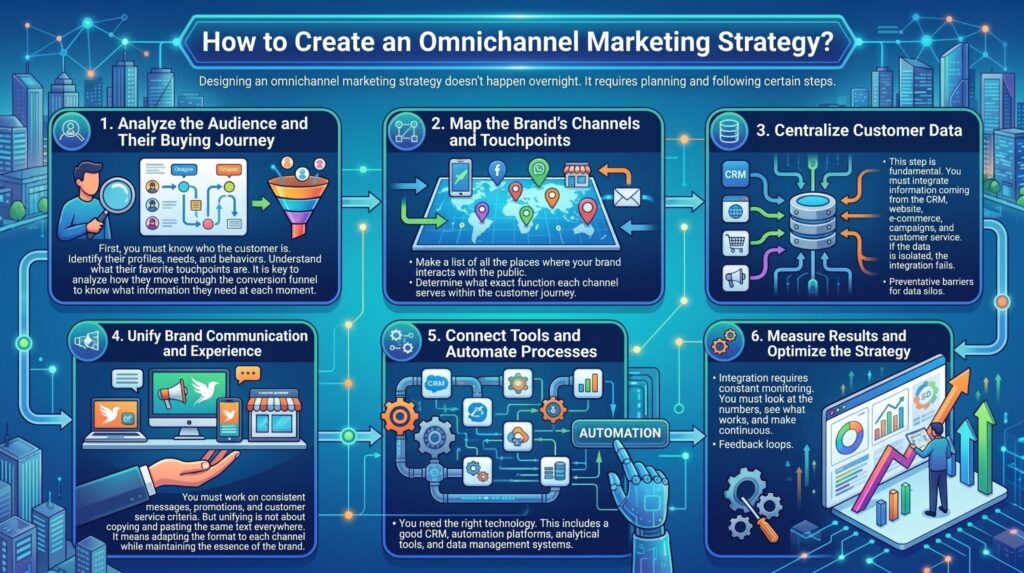
Analyze the Audience and Their Purchase Journey
First, you need to know who the customer is. Identify their profiles, needs, and behaviors. Understand which touchpoints they prefer. It’s key to analyze how they move through the conversion funnel to know what information they need at each moment.
Map the Brand’s Channels and Touchpoints
Make a list of all the places where your brand interacts with the public. Determine the exact role each channel plays within the customer journey.
Centralize Customer Data
This step is fundamental. You have to integrate information from the CRM, the website, the e-commerce, campaigns, and customer service. If the data is siloed, the integration fails.
Unify Communication and Brand Experience
You must work on consistent messages, promotions, and service criteria. But unifying doesn’t mean copying and pasting the same text everywhere. It means adapting the format to each channel while maintaining the brand’s essence.
Connect Tools and Automate Processes
You need the right technology. This includes a good CRM, automation platforms, analytics tools, and data management systems.
Measure Results and Optimize the Strategy
Integration requires constant monitoring. You have to look at the numbers, see what works, and make continuous adjustments.
Example of an Omnichannel Marketing Strategy
Seeing how it works in practice always helps. If we look for omnichannel marketing examples, the focus is always on continuity.
Imagine this scenario. A user discovers a software solution for their company through a LinkedIn ad. They click and visit the website to see the features, but don’t sign up. The next day, they receive a personalized email with a success story related to their industry. The user has a question about the technical implementation, so they reach out through the company’s WhatsApp chat. The support team already knows who they are, which page they visited, and which email they opened, thanks to the integrated data. Finally, the user schedules a meeting and closes the deal through a video call.
How to Measure an Omnichannel Marketing Strategy?
If you don’t measure, you can’t improve. Pay attention to these metrics to evaluate your performance:
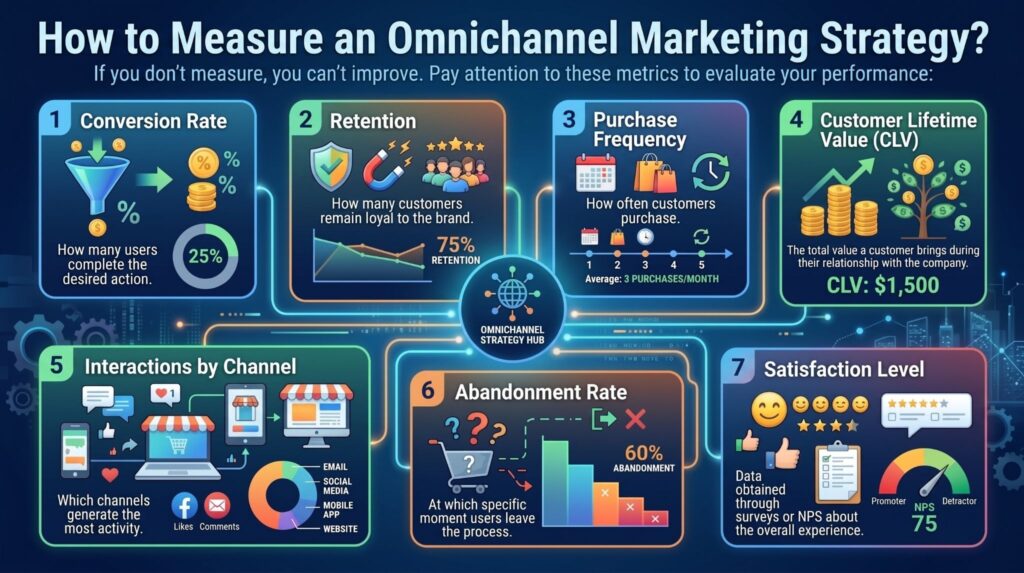
- Conversion rate: How many users complete the desired action.
- Retention: How many customers stay loyal to the brand.
- Purchase frequency: How often customers buy.
- Customer lifetime value (CLV): The total value a customer brings during their relationship with the company.
- Interactions per channel: Which media generate the most activity.
- Abandonment rate: At what specific moment users drop out of the process.
- Satisfaction level: Data obtained through surveys or NPS about the overall experience.
Conclusion: Integrate All Your Brand’s Channels with MD Marketing Digital
Putting the customer at the center is the foundation of everything. To truly achieve this, you need to connect data, tools, messages, and teams. If your channels operate in isolation, you’re simply losing sales and frustrating people.
Designing this takes time, method, and technical expertise. If you need help coordinating your company’s communication professionally, talk to a specialized digital marketing agency. At MD Marketing Digital, we can design a comprehensive strategy tailored to your brand. Contact us and let’s see how to make it happen.

- How to Appear in AI Overviews: GEO Keys to Gain Visibility on Google - October 13, 2026
- Programmatic SEO: What It Is, How It Works, and When to Implement It - October 2, 2026
- International SEO: How to Rank a Website in Different Countries and Languages? - September 25, 2026
¿Qué te pareció este artículo?
What do you think about this post?