Read AI summary
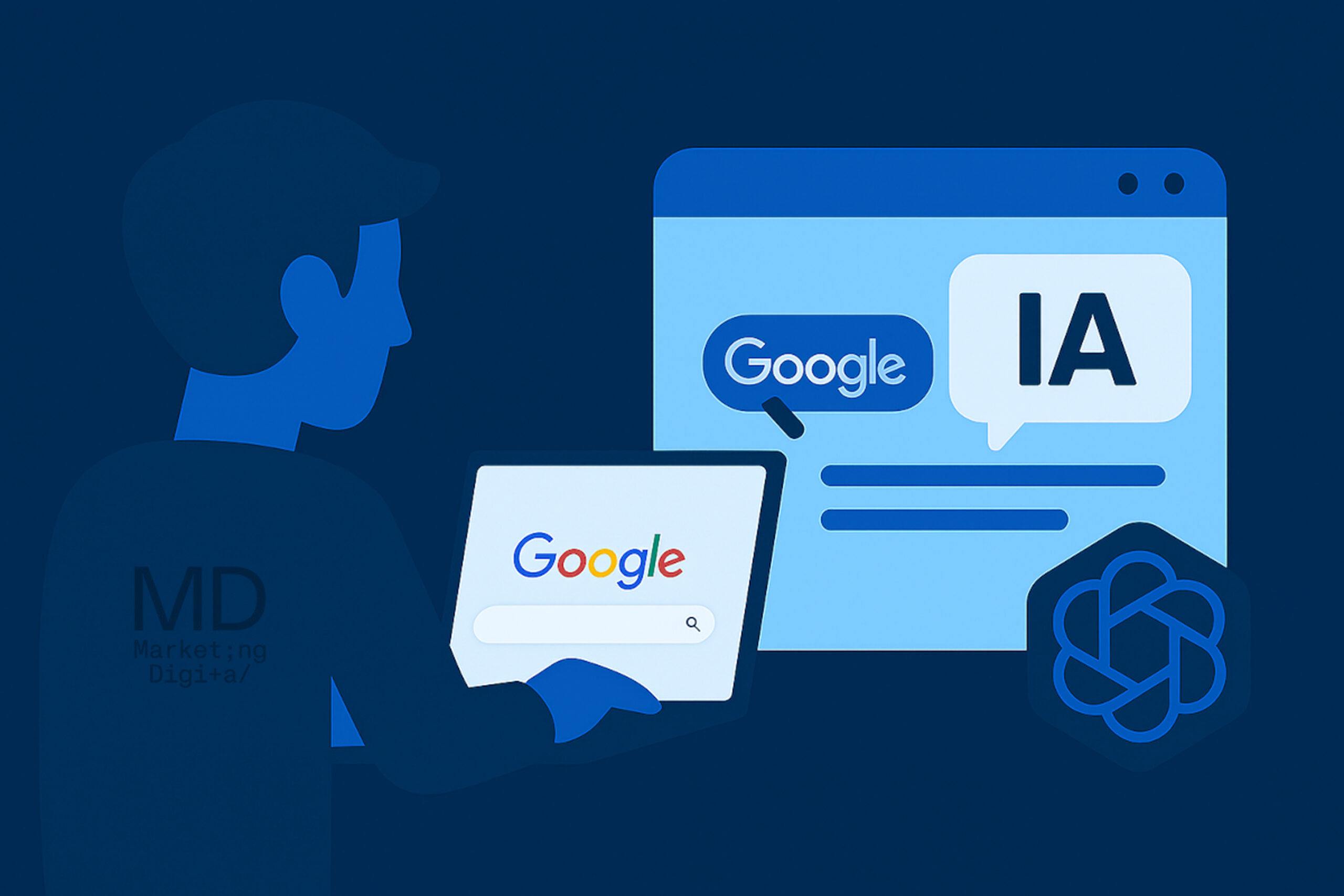
Until recently, SEO revolved almost entirely around a single player: Google. Optimizing for its algorithm was the safe path to gain visibility. But everything changed with the arrival of large language models (LLMs) like ChatGPT, Bard, Gemini, Claude, or Perplexity. Search is no longer limited to displaying a list of links—it now generates direct, more human, and contextual answers. Google made this clear with its new SGE (Search Generative Experience) interface, which responds as if it were having a conversation with you.
This change is not a threat but an opportunity. For those who create useful, clear, and well-structured content, LLMs can become allies to amplify reach. And for brands, it represents a chance to stand out in a more conversational ecosystem, where success no longer depends on the number of clicks, but on who delivers better value. In this article, we’ll show you how to adapt your SEO strategy to LLMs so you don’t get left behind.

What is an LLM and why does it affect traditional SEO?
LLMs (Large Language Models) are artificial intelligence models trained on massive amounts of text. They are capable of understanding natural language, generating responses, summarizing documents, and even reasoning. Tools like ChatGPT are based on LLMs to answer questions in a conversational way, without needing to send the user to another site.
The answer to the question what are LLMs in AI can be summed up as a technology capable of learning language patterns and replicating them coherently. But beyond the technical aspect, their most disruptive application lies in how they transform access to information. It’s no longer about visiting a website, but about getting an almost instant answer.
This leads us to a key shift: instead of presenting a list of links, LLMs provide direct answers. This gives rise to the concept of LLMO (Large Language Model Optimization), a natural evolution of SEO, designed to position content in these new environments.
What is LLMO and how is it different from traditional SEO?
What is LLMO? It’s a strategy that aims for content to be understandable, usable, and citable by language models. In other words, when someone asks a chatbot like ChatGPT or uses Google SGE, your content is the one that gets cited or summarized in the generated response. Unlike classic SEO, LLMO doesn’t aim for clicks, but for mentions.
When we talk about LLMO vs. SEO, the former focuses on making sure the AI understands you, while the latter tries to convince humans to click. In traditional SEO, factors like link building, time on page, CTR, or keywords matter. In LLMO, what counts is the clarity, accuracy, and authority of the content so it can be referenced by a language model.
This introduces a new concept: “citation in AI responses.” Instead of competing for the top spot in the SERP, you’re now competing to be the source used by an AI in its answers. It’s a new paradigm—but one that’s increasingly unavoidable.
How to optimize content for LLMs: best practices
Optimizing content for LLMs requires a fundamentally different approach from traditional SEO. Language models especially value factual, verifiable, and logically structured content. To get an LLM to choose your content as an authoritative source, you need to write with a citation intent—that is, create paragraphs that can be extracted and directly used in AI-generated responses. This means adopting an explanatory and direct style, avoiding ambiguity, subjective opinions, and statements that can’t be easily verified.
Best practices include the use of clear structures such as numbered lists, comparison tables, precise definitions, and statistical data from reliable sources. LLMs prefer content that answers specific questions in a concise yet complete way.
Additionally, the writing should be objective and encyclopedic, similar to the style of Wikipedia or high-quality technical documentation. Therefore, it’s recommended to avoid overuse of superlatives, unfounded personal opinions, and highly specific cultural references that could confuse the models. Instead, focus on creating evergreen content that remains relevant over time. LLMs also value thematic consistency, so it’s essential to maintain a clear focus and avoid digressions or filler content.
How to structure content so that LLMs understand it better
As mentioned earlier, LLMs work best with content that follows a logical and hierarchical structure. To achieve this, it’s recommended to use H1, H2, and H3 tags clearly, include descriptive headings, introductory summaries, and thematic divisions. Using bullet points or tables helps summarize key ideas in a way that AI can easily extract.
Additionally, it’s important for each section to answer a specific question or develop a central idea. This makes it easier for the model to associate the content with a specific search intent. Avoiding ambiguity and using synonyms or rephrasings also contributes to better semantic understanding. Simply put: create content for robots, which don’t have human sensitivity.
Why authority and EEAT are still key for LLM SEO
Although SEO is changing, some fundamentals remain just as relevant. The authority of content in the age of AI, the author’s experience, the trustworthiness of the source, and its freshness are still essential. In other words, the EEAT framework (Expertise, Experience, Authoritativeness, Trustworthiness) also applies in the world of LLMO.
LLMs have been trained to recognize and value trustworthy sources. They prefer content authored by experts, published on reputable sites, and regularly updated. If you want to position your brand or site in this new environment, make sure to clearly state authorship, cite sources, and demonstrate topic expertise.
Good content for LLM SEO should have identity, clarity, and depth. And even though there’s not yet a traditional ranking system, trustworthy content is more likely to be cited in AI-generated responses.
How to measure the impact of an LLMO strategy
There are currently no official metrics that indicate whether your content is being used by a language model. However, there are indirect signals that can help infer its impact. One of them is the no-click search: people search for something, find it cited in an AI response, and don’t visit your site—but still mention or share it.
Another way to know if your content is being cited by AI is by checking referral traffic in GA4. At MD Marketing Digital, we developed a tool that lets you quickly and easily filter referral traffic coming from LLMs. If you want access to the tool, leave us a comment!
You can also check whether fragments of your text appear in responses from ChatGPT, Gemini, or Perplexity, for example. Another indicator is if your brand starts being mentioned more frequently without a corresponding increase in organic clicks. Even though we can’t yet measure the impact of LLMO precisely, there are more and more ways to track it. And what today is a weak signal, may become a key metric tomorrow.
FAQs about SEO for LLMs
What is LLMO in SEO?
It’s a strategy designed to make content understandable and citable by language models like ChatGPT or Gemini. Instead of aiming for clicks, it seeks visibility in AI-generated responses.
Is traditional SEO still useful?
Yes, it remains essential for Google’s classic search engine. However, with the rise of conversational interfaces, it’s wise to have a dual strategy: combine traditional SEO with LLMO techniques.
What content formats work best for LLMs?
Language models prefer clear definitions, short paragraphs, tables, lists, evergreen content, and verifiable references. Avoid ambiguity or overly generic texts.
Conclusions
The evolution toward AI-powered search engines doesn’t eliminate SEO—it transforms it. LLMs are already redefining how we find information, and LLMO shows the way to become part of those new answers.
Adapting your content isn’t just an option—it’s a necessity if you want to remain visible. And the best part: it’s an opportunity to deliver real value, clarity, and relevance to your audience.
Want to review your content strategy and get ready for this new landscape? Now’s the time to take the step: experiment with AI-optimized content and consider consulting with SEO experts. Your next source of visibility could be an AI. Make the most of it!

- SEO for LLMs: how to adapt to the new AI-powered search - August 18, 2025
- What are CAPTCHA and reCAPTCHA, and what is the difference between them? - July 29, 2025
- What is Lead Generation and why is it key in digital marketing? - July 14, 2025
¿Qué te pareció este artículo?
What do you think about this post?